

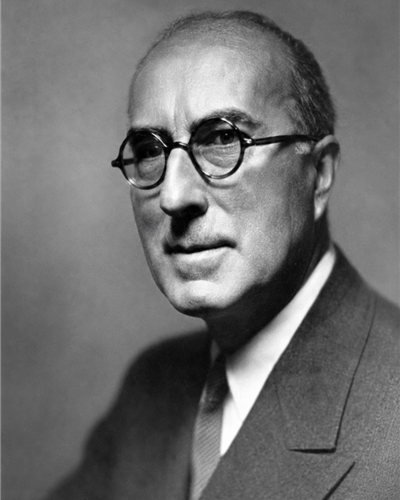
Section dedicated to Richard D. Wyckoff (1873–1934): reading the market through supply and demand, accumulation and distribution phases, «composite man» behaviour.
Menu → Market Cycles → Wyckoff tradition — Path of the volumetric school. Recommended prerequisites in Encyclopedia → Concepts (order book, volume, market cycle). For Hurst use Hurst tradition.
Source: the path begins with R. D. Wyckoff's Studies in Tape Reading (1910) and How I Trade and Invest in Stocks and Bonds (1922 record; local scan of a 1925/1926 fifth edition). SMI and the bibliographic record of the 1931 course document later continuity; Wyckoff Analytics, StockCharts, Pruden and Forte are modern readings. The local corpus does not contain the complete 1931 course, so biographical context and claims attributed to that course remain
referenced.
Market Cycles — quick comparison
| Hurst | Wyckoff | |
|---|---|---|
| Focus | Periodicity and cyclic timing | Supply/demand and phases |
| Hub | ← you are here | |
| Chart | Envelopes, nominal cycles | Trading range, volume |
| Path status | ✅ Ch. 1–11 + appendices (stable) |
✅ 28 entries — Rounds 1–4 + 1910/1922 sources (stable) |
Start here — full Wyckoff path (28 entries)
Recommended order — Follow all 28 steps in sequence (Rounds 1–4 + 1910/1922 primary sources). Each entry has Next / Previous path links.
| # | Entry | What you learn |
|---|---|---|
| 1 | Method context and goal | |
| 2 | The «composite operator» | |
| 3 | Supply/demand, cause-effect, effort/result | |
| 4 | Historical root — Studies in Tape Reading | |
| 5 | Operational autobiography — capital, swing, rules | |
| 6 | Five operational steps | |
| 7 | Step 2 — comparison with the market | |
| 8 | Accumulation → markup → distribution → markdown | |
| 9 | Trading range and cause-effect | |
| 10 | Accumulation: phases A–E | |
| 11 | First demand signs in phase A | |
| 12 | Selling climax — accumulation phase A | |
| 13 | Automatic rally after SC | |
| 14 | Climax retest — range bounds | |
| 15 | Spring — support test | |
| 16 | Sign of Strength | |
| 17 | Last Point of Support | |
| 18 | Distribution: phases A–E | |
| 19 | First supply signs in phase A | |
| 20 | Buying climax — distribution phase A | |
| 21 | Upthrust after distribution | |
| 22 | Sign of Weakness | |
| 23 | Last Point of Supply | |
| 24 | Cause/effect chart | |
| 25 | Minimum target from range | |
| 26 | Stepping stones in markup | |
| 27 | Reaccumulation mirror | |
| 28 | Step 4 checklist |
Provenance map for the 28 entries
| Entries | Verified work or chapter | Level and limit |
|---|---|---|
| 1–5 | Studies in Tape Reading (1910), chs. I–XII + appendix; How I Trade and Invest in Stocks and Bonds (1922), chs. I–XIV; Wyckoff course, §9 (bibliographic record) | Primary roots for tape reading and autobiography; the 1931 course is not held in full |
| 6–9 | StockCharts, Wyckoff Analytics, Forte (1994), and Pruden/Belletante | Modern teaching codification, not wording from the primary books |
| 10–23 | Schematics and event glossary in the modern sources above and the SMI tradition | Later A–E vocabulary and operational abbreviations; no automatic retro-attribution to Wyckoff |
| 24–28 | Point & Figure, count, reaccumulation, redistribution, and nine tests: StockCharts, Wyckoff Analytics, Pruden ch. 7, and SMI | Modern operational synthesis; counts and checklists are not presented as complete 1910/1922 chapters |
Nomenclature check — “Tape reading” and price/volume reading are rooted in 1910; Composite Man is documented by course §9; A–E phases, PS/SC/AR/ST, Spring, SOS/LPS, PSY/BC/UTAD/SOW/LPSY, and the checklists belong to later teaching codification. Each entry keeps its specific source and limit at the bottom.
Profile: Richard D. Wyckoff.
Sources
- R. D. Wyckoff, Studies in Tape Reading (1910) — primary work for tape reading, volume and market behaviour; local copy and ingested chapters in
raw/sources/wyckoff/files/. - R. D. Wyckoff, How I Trade and Invest in Stocks and Bonds — 1922 bibliographic record; the local scan carries a fifth-edition title page dated 1925/1926. It is the primary autobiographical and operational source, with 14 chapters in
raw/sources/wyckoff/files/chapters/how-i-trade/. - WorldCat — The Richard D. Wyckoff Method of Trading in Stocks — bibliographic record for the course/method, useful for chronology but not a substitute for a complete primary copy of the 1931 course.
- Wyckoff Stock Market Institute — Library — later institutional continuity and catalogue, not a primary source for the 1910/1922 formulations.
- Wyckoff Analytics — Wyckoff Method and StockCharts — The Wyckoff Method — modern teaching codifications for terminology and schematics; not historical origin.
Linked encyclopedia
| Hub | Useful entries for Wyckoff |
|---|---|
| Spring, SOS, LPS | |
| Wyckoff section (techniques) |