

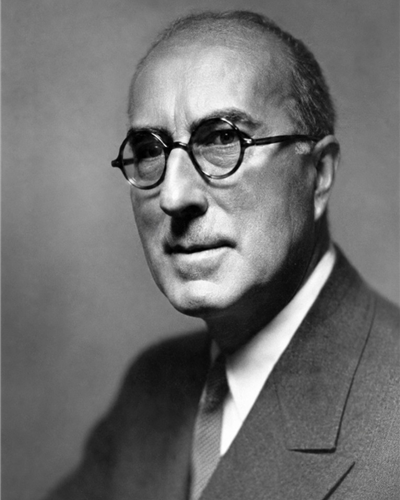
Who this entry is for — Readers who know tape reading (1910) and want Wyckoff’s full picture of investing + trading: how to build capital, when to average (and when not), why technical position matters as much as fundamentals, and which rules major operators follow.
Primary source: R. D. Wyckoff, How I Trade and Invest in Stocks and Bonds (1922 bibliographic record; the local scan carries a fifth-edition title page dated 1925/1926). Written twelve years after Studies in Tape Reading, with thirty-three years on Wall Street and fifteen as editor of The Magazine of Wall Street. Cyclepedia separates this operational autobiography from modern Wyckoff Analytics teaching (phases A–E).
Prerequisites
Wyckoff tape reading (1910), Composite Man, Supply and demand. Next step: Five Wyckoff steps.
The book in one sentence
Wyckoff describes how he went from a $20/month clerk (1888) to successful publisher and operator: years of study before real capital, trading profits reinvested in income securities, 30–60 day swings more profitable than day trading, and ruthless due diligence before every commitment.
Ch. I–II — Learning and the operating cycle
First lessons (1888–1907)
Wyckoff began studying railroad statistics as a teenager; bought his first share (St. Louis & San Francisco, $4) only in 1897, after eight years of preparation. He learned from:
- A telegraph operator with a fixed 2-point stop and 200-share lots — the broker’s only consistently profitable client.
- A clerk who pyramided American Sugar to $3,000 and bought a house.
- Dow’s theory: three simultaneous movements (long trend, 30–60 day swings, short oscillations).
Thesis: price does not follow intrinsic value alone — manipulation, technical condition, and market trend matter. Owning the certificate does not protect against fluctuations.
Brokerage, publishing, and swings
Founding The Magazine of Wall Street in the 1907 panic, Wyckoff observed thousands of clients and concluded: ignorance, mental laziness, seeking advice instead of independent study.
Charts must not be followed blindly: they record the concrete history of collective impression; they help understand public psychology. The profitable cycle:
- Silent accumulation
- Markup (push higher)
- Distribution (sell to enthusiastic public)
Wyckoff moved from daily tape-reading profits to 30–60 day swings — fewer commissions, more margin for error. Practical rules:
- 5–10% of free capital for active trading
- Profits → reinvested in solid income holdings
- 2–3 point stops; expected profit 3–4× risk
- U.S. Steel case: three campaigns, ~$20,000 net on $3,000 margin each
Markup example — Accumulate 50–60, average target 80, push to par; sell on return to 70 after distribution. Wyckoff: «Real profit lies in capturing the intermediate move, not every tick.»
Ch. III–IV — Three defensive lines and opportunities
Why certain stocks
Wyckoff organizes the portfolio as trench warfare:
| Line | Role | Examples |
|---|---|---|
| Rear guard | Solid income investments | Equipment trust, high-grade bonds |
| Second line | Income + profit potential | Short-term notes, banks |
| Vanguard | Controlled speculation | Swings on active names |
Equipment trust bonds: growing collateral on rolling stock; almost never in default. Harriman’s principle: «I don’t care about 10%; I want something that grows.»
December 1919: railroad bonds 10–25 points below two-year highs — Wyckoff considered them «too low» with 5–8% yields plus revaluation potential.
Unearthing opportunities
- Intrinsic undervaluation > modest coupon yield
- Convertible bonds: downside protection + participation in common rally
- «Marking down the cost»: sell part at profit to lower cost basis on the remainder
- Lows on imminent threat, not the event itself (DL&W ~$180 on coal strike threat, Oct 1919)
- High-priced stocks ($60–400) with real earning power vs penny stocks without dividends
Ch. V–VII — Mining, fundamentals, Columbia Graphophone
Mining stocks
- Never marry a security — periodic portfolio review (vs Carnegie «eggs in one basket»)
- Expensive due diligence ($2,000 engineering reports) but mandatory
- Magma Copper: ~$20 to $69 in 3 weeks; ~$55,000 paper profit not taken — lesson on patience and not trading «in hindsight»
Investment checklist (Ch. VI)
Wyckoff’s hierarchical order:
- Long trend of the market (market discounts 6–12 months ahead)
- Nature and trend of the sector/industry
- Trend of the selected company
- Management and reputation
- Financial position and earning power
- Intermediate technical position (30–60 day swings)
Rockefeller: investments in necessities (oil, gas, food, steel). Pools: accumulate silently → push → distribute exploiting public ignorance. Weak technical position: too many speculators long with unrealized profit.
The odd-lot story (1919)
40 shares Columbia Graphophone at average $164.25:
- Friend anticipated post-meeting announcement; Wyckoff calculated implied quarterly dividend ~$37/year on $135
- Facts confirmed on site; technical position «nothing for sale»
- Compounded stock dividends: 40 → 463 shares; partial sale at $70 repaid capital
- Rule: sell when insiders distribute, not at arbitrary percentage targets
Ch. VIII–X — Rules, forecasting, averaging down
Trading rules
| Operator | Principle |
|---|---|
| Keene | «Fine if right 6 times out of 10»; absolute stop |
| Livermore | 2–3 day time stop; exit when you hope |
| Hayden | «The day to buy is not the day to sell» |
| Wyckoff | 10–20 point swings; study away from Wall Street with high/low/last |
Out-of-towner: can operate via wire with minimal data — no ticker or continuous news required.
Sector forecasting (oil)
Post-war Wyckoff evaluated steel, building, railroads, but concluded oil offered the best risk/reward: consumption > production for two years, field exhaustion (Ranger, Burkburnett), structural demand (autos, tractors, lubricants). Producers hold the winning cards vs refiners.
The truth about averaging down
- Price drop ≠ cheaper stock if earnings and prospects deteriorate
- 85–90% of failures = overtrading or insufficient capital
- Union Pacific (1909): buys at 219, 185, 160, 135 — capital exhausted at 116 («went out with the tide»)
- Valid alternative: averaging out — buy at lows, sell on bounces, reduce average cost
Card — Before averaging
- Ask: is the decline technical/manipulative or fundamental deterioration?
- Capital: do you have reserves for 2–3× expected drawdown depth?
- Link: Scaling in, Overtrading
Ch. XI–XIV — Judgment, capital, diligence, ownership
~50 principles (Ch. XI)
- Primary goal: safe investment; trading profits → income holdings with compounding
- If unsuited to trading: prove it and quit, otherwise study until you improve
- Foresight distinguishes speculation from gambling
- Own judgment > inside info, tips, «Wall Street Ghosts»
- Pro/con method: list favorable and unfavorable facts on paper
Safeguarding capital (Ch. XII)
- Wyckoff: 8 years study before first investment; 6 more before trading
- Public buys at tops (95% bullish); two years’ profits lost in 30–60 days of bear market
- Knowledge before capital — save while you study
How millions are lost (Ch. XIII)
- Investigation before investing — not after the loss
- 97% of patents without commercial value
- Broker executes, does not advise investments
- Strong fundamentals + wrong timing = car without synchronized spark
- 10–20 heterogeneous names vs concentration
- Arlington Copper case: no buyer visited the mine (20-min train, $1)
Who owns the stock (Ch. XIV)
- «Stocks in weak hands» vs strong hands — almost decisive question
- Pools/bankers buy before expected improvement; absorb float
- Railroads: 100,000-share blocks → today 10-share lots = weak market until institutional accumulation resumes
- Hughes Commission 1909 on floor traders and technical advantages
Bridge to modern Wyckoff
| How I Trade (1922) | Modern teaching |
|---|---|
| 30–60 day swings | Trading range + phases A–E |
| Technical position | Nine buying/selling tests |
| Pool accumulation/distribution | Composite Man |
| Three defensive lines | Reserve capital + size |
| Pre-investment due diligence | Point & Figure cause/effect |
Sources
- R. D. Wyckoff, How I Trade and Invest in Stocks and Bonds, 1922 bibliographic record; the local scan carries a fifth-edition title page dated 1925/1926.
- Open Library bibliographic record for the first edition and title.
- Local corpus: PDF
raw/sources/wyckoff/files/How-I-Trade-and-Invest-1922.pdfand 14 ingested chapters inraw/sources/wyckoff/files/chapters/how-i-trade/; the page's operational claims are traced to those chapters.
Internal study
- PDF:
wikiciclo/raw/sources/wyckoff/files/How-I-Trade-and-Invest-1922.pdf - Studio sheets:
studio-wyckoff/how-i-trade/cap-01…cap-14(ingest-reviewed 2026-07-12) - Previous: Tape reading (1910)