

Trading did not emerge from a single manual. It grew through people who observed different markets, formed hypotheses, built tools, and often corrected their own mistakes. Here you can begin with a person and follow their ideas without confusing biography with method.
If this is the first time you meet a name, open the profile: it begins with who that person was and which problem they tried to solve. The guided path then moves from the essential concept to procedure and, finally, to limits.
Guided paths
Each available path connects a person to a small set of verified pages. Historical schools lead to the complete tradition; tool builders lead from the measurements to their use and, finally, to verification. These are neither rankings nor trading shortcuts.
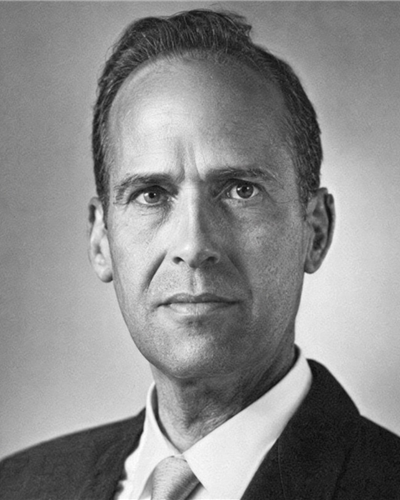
J. M. Hurst
1924–2005- 01Start hereHurst's operating philosophy: timing, measurement, and limits
- 02Understand the modelHurst's five principles: the cyclic model
- 03Learn the procedureHurst nominal cycles: duration and variation
- 04Testing and limitsHurst's cyclic-analysis pitfalls: three causes of failure
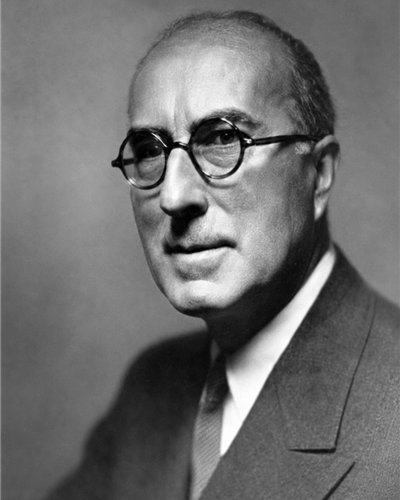
Richard D. Wyckoff
1873–1934- 01Start hereIntroduction to the Wyckoff method
- 02Understand the modelThree Wyckoff laws
- 03Learn the procedureFive Wyckoff steps
- 04Testing and limitsNine buying and selling tests (Wyckoff)
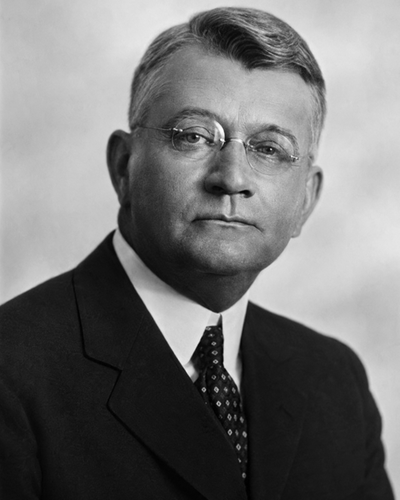
Ralph Nelson Elliott
1871–1948- 01Start hereThe Wave Principle (1938): work, context, and Elliott corpus
- 02Understand the modelThe 5–3 structure and wave degrees in the Elliott tradition
- 03Testing and limitsElliott wave counts: patterns, rules, alternatives, and limits
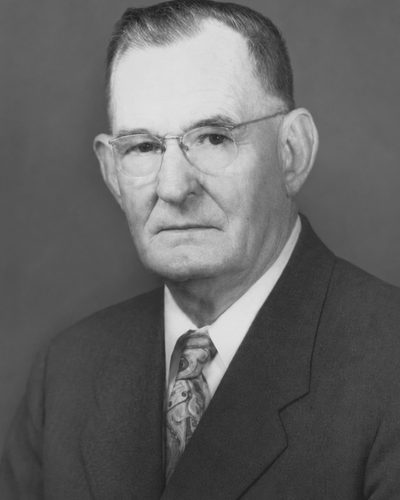
W.D. Gann
1878–1955- 01Start hereW. D. Gann: Works, Sources, and Verified Chronology
- 02Understand the modelGann: Tape Reading, Volume, and Trend
- 03Learn the procedureGann: Rules, Trend, and Risk Control
- 04Testing and limitsGann: Cycles, Vibration, and Astrology in the Sources
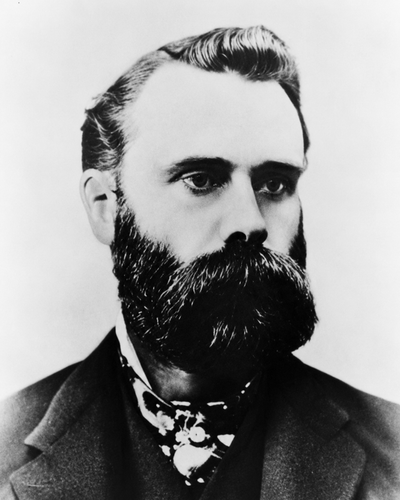
Charles H. Dow
1851–1902- 01Start hereDow Theory
- 02Understand the modelThe three market movements in the Dow tradition
- 03Learn the procedureThe Dow line: accumulation, distribution and breakout
- 04Testing and limitsConfirmation between the averages in Dow Theory

J. Peter Steidlmayer
1938–- 01Start hereSteidlmayer tradition introduction
- 02Understand the modelMarket Profile
- 03Learn the procedureTrading strategy — Market Logic
- 04Testing and limitsSoybean futures (1991)
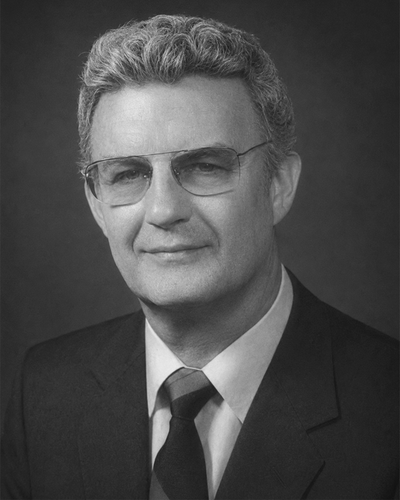
J. Welles Wilder
1935–2021- 01Start hereRSI (Relative Strength Index)
- 02Understand the modelATR (Average True Range)
- 03Understand the modelADX (Average Directional Index)
- 04Learn the procedureParabolic SAR
- 05Testing and limitsBacktest

John Bollinger
1950–- 01Start hereVolatility: meaning, measures and limits
- 02Understand the modelStandard deviation of returns
- 03Learn the procedureBollinger Bands
- 04Testing and limitsBacktest

Larry Williams
1942–- 01Start hereWilliams %R: the close's position within the range
- 02Understand the modelCOT report
- 03Learn the procedureMarket seasonality
- 04Learn the procedurePosition sizing
- 05Testing and limitsBacktest

Ray Dalio
1949–- 01Start hereDiversification
- 02Understand the modelCorrelation
- 03Learn the procedureRisk parity
- 04Learn the procedureMarket regime
- 05Testing and limitsStress testing
All the people
The gallery automatically gathers every published biography and groups the profiles by family of ideas. Each card leads to the person; from there, links lead to concepts and sources without duplicating the same material.
Origins of the craft
Tape, indexes, candlesticks, and the first market grammars.
Richard D. Wyckoff: reading prices and trades, studying market campaigns and controlling risk. The original books and the later tradition.
Open profileCharles H. Dow (1851–1902) was a financial journalist, co-founder of Dow Jones & Company and The Wall Street Journal. His averages and editorials are the starting point of the tradition later called Dow Theory.
Open profile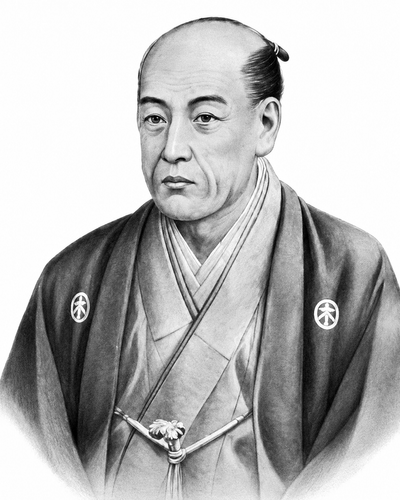
Munehisa Homma (1717–1803) was a rice trader from Sakata. Sources connect him to a tradition of market discipline, but do not establish that he invented modern candlestick charts.
Open profile
Jesse Livermore (1877–1940) documented a method built around price-and-time records, market leaders, pivotal points, and loss control. His manual must be distinguished from the character Larry Livingston.
Open profileTime, cycles, and form
Models that organise oscillations, waves, and recurrence.
J. M. Hurst, engineer and author of Profit Magic (1970): documented biography, nominal cycles, tools, later works and a study path.
Open profile
Giuseppe Migliorino founded Borsari and published Italian manuals on market cycles. This profile separates documented contributions from unsupported claims.
Open profileW. D. Gann through the 1909 account, the 1923 manual, and the 1927 novel: ideas to study and limits of attribution.
Open profileA documented biography of Ralph Nelson Elliott, from the original works to the distinction between his contribution and later codification.
Open profileTool builders
Measures and visual languages that became part of daily practice.
J. Peter Steidlmayer (b. 1938): CBOT trader and creator of Market Profile, a TPO representation of time spent at each price; volume data belongs to a separate layer.
Open profile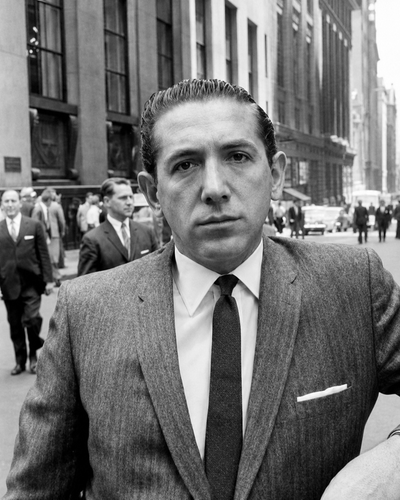
Nicolas Darvas developed box theory: price and volume define a range, while breakouts and stop orders define entry, risk and exit.
Open profileJ. Welles Wilder organised volatility, direction, strength and stops into distinct tools: ATR, DMI/ADX, RSI and Parabolic SAR.
Open profileJohn Bollinger developed volatility-adaptive bands in the 1980s: they describe relatively high or low prices, but are not standalone signals.
Open profileRules, tests, and systems
From trend following to quantitative research and operating discipline.

Ed Seykota (b. 1946): pioneer of computerised trend following — the first systems ran on punch cards in the early 1970s — and of trading psychology as a discipline. A documented track record among the best ever.
Open profile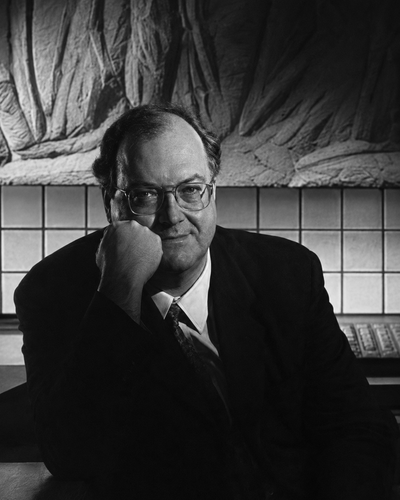
Richard Dennis (b. 1949): Chicago's 'Prince of the Pit', from a few hundred dollars to hundreds of millions in commodities. With the Turtles experiment he proved that winning trading can be taught.
Open profileLarry Williams developed Williams %R and popularized the use of COT data, seasonality, and testable rules in short-term trading.
Open profile
Linda Raschke has documented a short-term trading approach built on written setups, decision records, routines and continuous research.
Open profile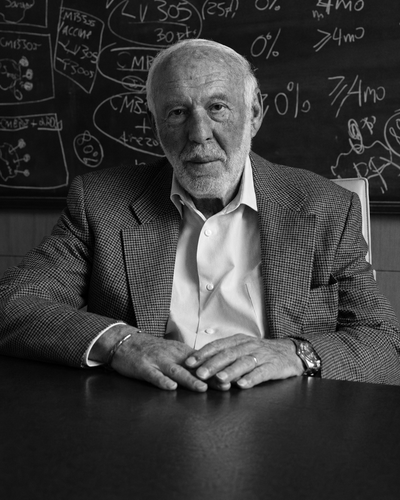
Jim Simons (1938–2024) brought mathematics, data and collaborative research into quantitative trading; the public lesson is the process, not secret signals.
Open profileMacro scenarios
Regimes, liquidity, concentration, and risk management.

Paul Tudor Jones (b. 1954): macro trader, founder of Tudor Investment. He anticipated and rode the October 1987 crash; famous for 5:1 asymmetric bets and the 200-day moving average rule.
Open profile
George Soros (b. 1930): founder of the Quantum Fund and theorist of reflexivity — markets do not reflect reality, they alter it. On 16 September 1992 his position against sterling bent the Bank of England.
Open profile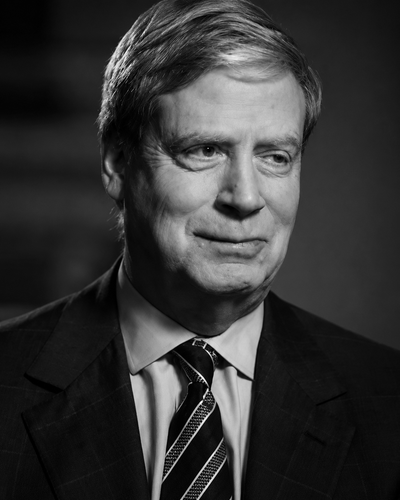
Stanley Druckenmiller describes a flexible, multi-asset macro process concentrated in the strongest theses. Verified contributions and practical limits.
Open profileRay Dalio built Bridgewater around explicit principles, historical testing and portfolios balanced across scenarios. Contributions, limits and study path.
Open profileThe investor’s horizon
Value, quality, and long horizons as a counterpoint to trading.

How to read a profile
A date, book, or company needs a source. A later interpretation is identified as such. This distinction matters: many techniques now associated with a master were formalised by students, editors, or schools that appeared later.
Primary sources come first when they are available; archives, institutions, and historical research supply context. Return claims, unverifiable anecdotes, and circular attributions do not become facts merely because they are repeated online.
From the person to the method
To study an idea without following an author, enter Concepts. For tools and procedures, continue to Indicators and Methodologies. Traditions instead reconstruct how a market language developed over time.
Orientation sources
- Samuel A. Nelson, The ABC of Stock Speculation, 1903.
- J. M. Hurst, The Profit Magic of Stock Transaction Timing, 1970.
- Jack D. Schwager, Market Wizards, 1989.
- Specific primary works and biographical sources are listed in each profile.