

Richard D. Wyckoff was a trader, author and financial publisher active on Wall Street. His books teach readers to study how prices change and how many shares trade, to form hypotheses about supply, demand and market direction. He connects this reading with trader preparation and control of losses.
Sources and scope — This profile follows Studies in Tape Reading (1910), chapters I and V, and How I Trade and Invest in Stocks and Bonds, chapters I–II, VIII and XII. Personal recollections remain attributed to the author; the contemporary presentation of the method is distinguished from the original books.
Master path
Study Richard D. Wyckoff in a clear order
Begin with the essential idea, move to the procedure, and finish with what can invalidate the reading.
- Start here Introduction to the Wyckoff method Reading price and volume in the Wyckoff tradition, distinguishing the author's writings from later phases, schematics, and teaching syntheses.
- Understand the model Three Wyckoff laws The three Wyckoff laws with sources and limits: supply and demand, cause and effect, and effort versus result.
- Learn the procedure Five Wyckoff steps The five Wyckoff steps: market, relative strength, Point-and-Figure cause, readiness, timing, risk, and the nine tests documented in the sources.
- Testing and limits Nine buying and selling tests (Wyckoff) Historical Wyckoff nine-test lists for accumulation and distribution, with required charts, nine distinct reaccumulation tests and the redistribution limit.
Who he was
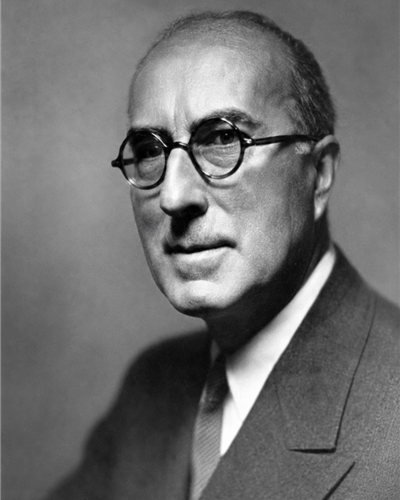
In the first chapter of How I Trade and Invest, Wyckoff recalls starting to study railroad and corporate statistics in 1888 at his employer's suggestion. He then describes his experience in brokerage offices and his observation of clients' mistakes: taking small profits, allowing losses to grow or committing too much after a favorable run.
In chapter II, he reports founding the magazine then called The Ticker, later The Magazine of Wall Street, during the panic of 1907. He explains how readers' questions, submitted articles and his own studies contributed to the work later collected in Studies in Tape Reading. These are autobiographical accounts: they document his account of his education and publishing activity, without independently verifying the financial results he claims.
The contribution documented in the books
- Reading trades in context. Tape reading means following the sequence of transaction prices and quantities, then printed on a paper tape. In Studies, chapter I, Wyckoff presents it as a way to estimate the immediate trend and the relationship between supply and demand. In chapter V, he specifies that volume must be assessed relative to the activity of the individual stock and the market: the same quantity does not carry the same meaning in every situation.
- Studying a campaign over time. In How I Trade and Invest, chapter II, he describes an upward campaign in three stages: accumulation of shares, marking up the price and distribution of positions. He describes the opposite sequence for operations on the downside. This is his interpretation of large operators' activity; that sequence does not already constitute the full A–E terminology of today's teaching schematics.
- Preparation, losses and costs. In chapters VIII and XII, he stresses the possibility of mistakes, the protection of capital and the burden of commissions and other costs. The overall result of operations matters more than the absence of individual errors. Preparation also precedes committing money, rather than being replaced by imitation of a famous trader.
From the author to the later tradition
In today's Wyckoff Analytics presentation, the method includes the Composite Man, three laws, A–E phases, five steps and nine tests. The Composite Man invites reading the market “as if” a single operator acted. This source documents its own teaching synthesis, not the historical origin of every term.
The complete course attributed to Wyckoff is not available in the consulted corpus. The provenance and variants of the schematics therefore need to be studied in the individual entries, distinguishing the original books, the course and later developments. We do not automatically attribute every checklist now published under his name to the author.
Limits of the reading
In chapter V of Studies, Wyckoff warns that volume indications are not always clear or infallible. Observed prices and quantities allow an interpretation to be constructed; they do not by themselves identify who traded or the participants' intentions. Recognizing an accumulation pattern in hindsight does not prove it could have been recognized in time.
Even within his books, the use of data varies with the type of operation: in chapter VIII of How I Trade and Invest, he describes an approach of his own based on daily prices, in which volume can help without being indispensable. Reducing his entire work to a single price-volume formula would erase these differences. The examples and results reported by the author do not establish returns that can be reproduced today.
What to study today
Start with the introduction to the Wyckoff method: it explains the terminology and distinguishes the sources before the schematics. Study the three laws to understand the model, then the five steps to order the questions; in the nine tests, check which observations and charts each test requires.
To study the author more closely, compare chapter V of Studies with chapter II of How I Trade and Invest: the first follows trades, while the second describes longer campaigns. Record separately the observed data, Wyckoff's interpretation and what subsequent market action could disprove. This is an exercise in reading sources, not a test of profitability.
Sources
- R. D. Wyckoff, Studies in Tape Reading (1910), chapter I, pp. 9–10 (definition); chapter V, pp. 78, 83 and 90–93 (volume context, limitations and campaigns). Primary source; printed page numbers in the scan.
- R. D. Wyckoff, How I Trade and Invest in Stocks and Bonds, chapter I, pp. 15–25; chapter II, pp. 35–40; chapter VIII, pp. 116–123; chapter XII, pp. 159–169. Primary autobiographical and operational source. The record is cataloged as 1922; the consulted copy shows 1925 on its title page and 1926 with a fifth-edition notice on the following page. References use the printed pages of this copy.
- Wyckoff Analytics — Wyckoff Method, modern teaching synthesis, accessed September 8, 2026.