

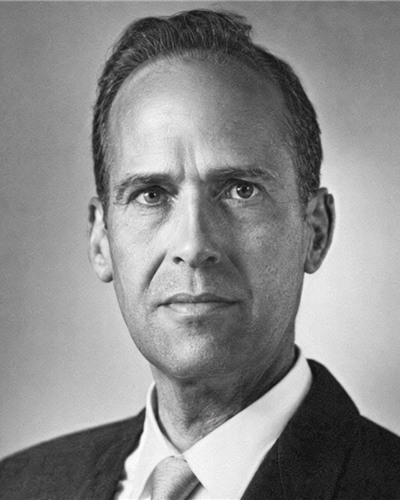
In plain language — We now know from Hurst himself that CycliTec aids appeared in 1971 and that the complete course followed in 1973. We still do not hold the full course: proof of existence and access to every detail are different things.
Source and level — This map separates the 1970 book, the 1974 primary source, the attested but incomplete 1973 course, and post-Hurst formalisations. Each entry should use only the layer that actually supports its claim.
Four documents, four functions
The 1970 book is the available primary source for the price-motion model, envelopes, averages, filters, case studies, and appendices.
“Cyclic Analysis” from 1974 is a signed primary source by Hurst. It documents Decision Models, CycliTec aids and services, the 1973 course, and field use since December 1971. Its text depicts formal phasing analysis, the periodogram, and diamonds, and names time translation, FLDs, and VTLs.
The 1973 CycliTec Services Training Course is cited bibliographically by the 1974 source, but Cyclepedia does not hold a complete primary copy. We therefore cannot verify its full lesson sequence, exact wording, or every operational variant.
David Hickson / Sentient Trader provides an accessible post-Hurst formalisation: eight principles, the Entry–Extension–Completion workflow, FLD variants, and their rules. It is useful for reconstructing later practice but should not be presented as an independent transcript of the course.
What changed
Before the 1974 source was located, Cyclepedia treated almost all post-book material as indirect attribution. Provenance is now more precise:
- Hurst founded Decision Models, Inc. in 1969;
- CycliTec Services published aids, chart services, and the course;
- the 1974 text directly attributes the vocabulary of FPA, diamonds, time translation, FLDs, and VTLs to Hurst.
One limit remains: the source does not say that Hurst founded or owned CycliTec Services. Documenting that a method was in use also does not independently establish its effectiveness.
Cyclepedia’s attribution rule
When a term appears in the 1974 article, the entry attributes it directly to Hurst and cites the article. When a detail appears only in Hickson, it is labelled a “post-Hurst formalisation.” When primary evidence is insufficient, Cyclepedia states the uncertainty instead of filling it with an invisible reconstruction.
This map also grounds Nicola: an answer should cite the layer that actually supports its claim rather than using “Hurst method” as an undifferentiated container.
Sources
- J. M. Hurst — “Cyclic Analysis”, Reason, May 1974
- J. M. Hurst — The Profit Magic of Stock Transaction Timing, Internet Archive
- David Hickson — The 10 Core Concepts of Hurst Cycles
- David Hickson / Sentient Trader — Hurst’s Cyclic Analysis