

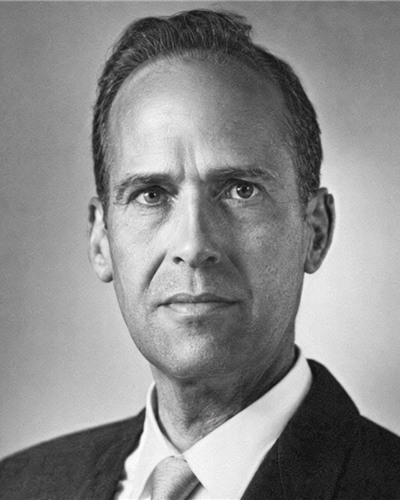
J. M. Hurst (1924–2005) fue un ingeniero y autor estadounidense que llevó al estudio de los precios herramientas del análisis de señales: medias, filtros y descomposición en oscilaciones. En su libro de 1970 intentó relacionar estas medidas con las decisiones de compra y venta.
De la ingeniería a los mercados
La nota The Author, al inicio del libro, sitúa su interés por la Bolsa en 1960. Refiere estudios de física y una carrera de veinticinco años en ingeniería aeroespacial, con experiencia en electrónica y análisis de señales. Este contexto ayuda a entender la pregunta que guía la obra: ¿cómo distinguir un componente oscilatorio del resto del movimiento del precio?
En 1969 fundó Decision Models, Inc.; en 1970 Prentice-Hall publicó The Profit Magic of Stock Transaction Timing. La nota biográfica de Reason fecha las ayudas informáticas CycliTec en 1971 y el curso completo en 1973.
En 1974 apareció el artículo Cyclic Analysis. Decision Models es distinta de CycliTec Services, citada como editora del curso.
Hurst: nacimiento, muerte y edad
Peter Eliades, en el obituario de la MTA, indica 2 de septiembre de 1924, Salina (Kansas) – 18 de agosto de 2005, Roseville (California): por tanto, 80 años. También recuerda el libro como origen de su propio interés profesional por los ciclos.
Recorrido del maestro
Estudia a J. M. Hurst en un orden claro
Empieza por la idea esencial, pasa al procedimiento y termina con lo que puede invalidar la lectura.
- Empieza aquí Filosofía operativa de Hurst: timing, medición y límites Por qué Hurst sitúa el timing en el centro del trading y cómo separar su hipótesis histórica de una estrategia realmente verificada.
- Comprende el modelo Cinco principios de Hurst: el modelo cíclico Los cinco principios cíclicos de Hurst: sumación, commonality, variación, nominalidad y proporcionalidad, con ejemplos y límites.
- Aprende el procedimiento Ciclos nominales Hurst: duración y variación Los ciclos nominales de Hurst explicados con claridad: escala de duraciones, ejemplo de 26 semanas, variación, uso práctico y límites.
- Verificación y límites Pitfalls del análisis cíclico según Hurst: tres causas de error Hurst separa shocks del valor, pérdida de amplitud y componentes lentos omitidos; la entrada traduce esos pitfalls en controles de riesgo modernos.
La aportación documentada
Un modelo del movimiento del precio
The Profit Magic of Stock Transaction Timing, publicado por Prentice-Hall en 1970, presenta el movimiento del precio como una combinación de componentes con duraciones distintas. La escala de ciclos nominales ofrece periodos de referencia; no afirma que cada mínimo deba llegar en una fecha fija. Duración, amplitud y relación entre componentes siguen siendo estimaciones.
Del modelo a las herramientas
Los envelopes curvilíneos, bandas alrededor del precio, sirven para estudiar oscilaciones en varias escalas (cap. 2). Las líneas de tendencia válidas, o VTL, ya se describen en el libro (cap. 4, p. 78). Las medias centradas y los procedimientos half-span/full-span utilizan ventanas ligadas a la duración del ciclo estudiado (cap. 6); los filtros y el análisis espectral desarrollan la descomposición numérica (cap. 11). El paso del modelo a la señal depende de estas elecciones, no solo de la presencia de una curva regular.
El libro y el curso son fuentes distintas
El artículo de 1974 describe análisis de fase y diamantes; para las señales VTL/FLD remite al curso. La reconstrucción verificada no incluye una copia primaria completa del curso. Para procedimientos posteriores, el recorrido posterior al libro separa fuentes e interpretaciones: no se atribuyen retroactivamente a 1970.
Límites del método y de las fuentes
En la p. 175, el propio Hurst advierte que una descomposición de Fourier puede representar incluso una recta como suma de oscilaciones: el cálculo por sí solo no prueba que el proceso original sea cíclico ni justifica proyectar sus periodos al futuro. Es una distinción esencial entre describir datos y demostrar un mecanismo predictivo.
La estimación de un ciclo no es un pronóstico seguro. Una media centrada se sitúa en el pasado respecto al último dato utilizado: leerla como si ya hubiera estado disponible en esa posición introduce información futura. El libro hace explícito este desplazamiento en la p. 98. Un envelope trazado a mano también contiene juicio; los parámetros, los datos disponibles, los costes y el riesgo deben declararse al verificar un procedimiento.
El libro documenta el método y los resultados del autor, no una eficacia actual verificada independientemente. El obituario es un recuerdo profesional póstumo; Hickson, un intérprete posterior.
Qué estudiar
- Filosofía operativa — el problema de timing que Hurst quiere abordar.
- Cinco principios del modelo de 1970 — las hipótesis en las que basa su lectura de los precios.
- Ciclos nominales — comparar la etiqueta «26 semanas» con la medida histórica de unas 21,4 semanas.
- Errores del análisis cíclico — comprobar interpretaciones forzadas y límites de la verificación.
Después de estos pasos, el recorrido Tradición Hurst conduce a las herramientas y a la formulación posterior al libro. Para el estudio avanzado, combina respuesta de filtros y error de borde con una verificación fuera de muestra: ¿qué información habría estado disponible al tomar la decisión?
Fuentes
- J. M. Hurst, The Profit Magic of Stock Transaction Timing, Prentice-Hall, 1970: nota inicial The Author; cap. 2, pp. 32–41; cap. 4, p. 78; cap. 6, pp. 97–99; cap. 11, p. 175. Numeración impresa. Registro bibliográfico de Google Books.
- J. M. Hurst, “Cyclic Analysis”, Reason, mayo de 1974: Predicting Price Reversal Timing, figura 3, pasaje sobre señales de acción, nota biográfica y referencias 5–6.
- Peter Eliades, “In Memory of James M. Hurst”, Technically Speaking, septiembre de 2005, p. 1. Las fechas de la p. 1 prevalecen sobre la edad discordante de la p. 2.
- David Hickson, The 10 Core Concepts of Hurst Cycles: ejemplo de exposición posterior, separada de las obras de Hurst.
Enlaces relacionados
Tradición Hurst · Ciclos nominales · Envelope curvilínea · Análisis espectral · Traders y tradiciones