

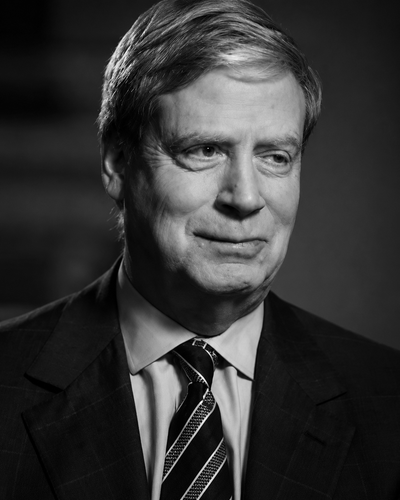
In brief — Stanley Druckenmiller is a global macro investor. In interviews he describes a process that moves across asset classes, changes its thesis when facts change and concentrates risk only when conviction is matched by continuous attention.
Who he is
The biography published by Bowdoin College, his alma mater, identifies him as founder and former chairman and chief executive of Duquesne Capital Management. It also records his later role as managing partner at Soros Fund Management. Those facts place him in global macro history without relying on celebratory accounts of individual trades.
The most useful source for studying him today is his direct explanation of process, not a performance ranking. In a 2021 Goldman Sachs interview, Druckenmiller described the ability to move among equities, bonds, currencies and other liquid exposures. Variety helps find opportunities and, more importantly, prevents an investor from becoming trapped in a wrong idea.
The documented contribution
The first element is multi-asset flexibility. Druckenmiller explains that liquid, nearly continuous markets make it possible to change a position when evidence contradicts the thesis. That is not inconsistency; it is discipline. For the student, it means defining in advance which data would falsify the hypothesis.
The second is selective concentration. In the Goldman Sachs interview, he uses the image of putting one's eggs in one basket and watching it carefully. The lesson is not “invest everything,” but connecting exposure, conviction and monitoring capacity. A large position requires clearer limits, not less caution.
The third is attention to macro liquidity. In a 2020 Economic Club of New York conversation, Druckenmiller says that liquidity can move markets more than earnings over intermediate horizons. The statement defines an analytical priority: monetary policy, credit and flows enter the picture before individual security selection. It is not an automatic signal.
Limits and proper use
Interviews are primary sources for his thinking, but not independent audits of results. This profile therefore avoids percentages and performance superlatives. Famous episodes, when unnecessary to explain the process, do not replace a testable rule.
None of the sources consulted publishes a replicable formula or an expected return. Flexibility and judgement remain essential parts of the process described.
Concentration can amplify errors quickly and is unsuitable without risk capital, liquidity and exit procedures. Liquidity can also sustain high prices without identifying the timing of a reversal. Every macro thesis needs a horizon, an invalidation condition and a maximum acceptable loss.
What to study today
- Build a reading of the market regime before selecting an instrument; separate growth, inflation, credit and liquidity.
- Compare asset classes, then assign capital only to theses with defined risk.
- Write the invalidation before entry and reduce exposure when facts change instead of defending the old opinion.
Sources
- Goldman Sachs, “Stanley Druckenmiller, Chairman and CEO of Duquesne Family Office”, 2021 — direct interview on multi-asset process and concentration.
- Economic Club of New York, transcript of the May 12, 2020 conversation — primary source on the role assigned to liquidity.
- Bowdoin College, Stanley Druckenmiller profile, 2014 — institutional confirmation of his career.
Links
Compare his approach with George Soros and continue through the trader gallery.