

The bet with William Eckhardt: is the great trader born or made? The Turtles experiment (1983–84) answered: made — with the right rules and the right size.
| Period | b. 1949 |
| Where | Chicago pits (MidAm, then CBOT) |
| Lens | Trend following on futures |
| Key sources | Market Wizards (1989); Covel's The Complete TurtleTrader (2007) |
Who he is
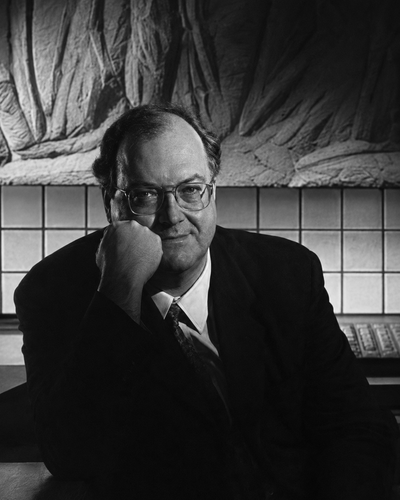
Starting at twenty with a small family loan on the minor MidAmerica Exchange, Dennis became within a decade one of the world's greatest commodity traders — the "Prince of the Pit" — with profits estimated in the hundreds of millions through the 1970s–80s. His place in history, though, was secured by a bet: against his friend and partner William Eckhardt, who believed talent innate, Dennis claimed he could train winning traders from scratch. He recruited a class of ordinary people by newspaper ad — the Turtles — taught them a complete system in two weeks and handed them real capital: collectively they generated over one hundred million dollars in profits.
Contribution
- The proof that method can be taught — the most famous controlled experiment in trading history: written rules + risk management + selection for discipline beat "feel".
- The Turtle system — Donchian-style channel breakouts, pyramiding in units, stops in volatility multiples (the N, i.e. the ATR), size as a fixed fraction of capital: a complete playbook, now public.
- Size as the heart of the system — the lesson the Turtles cite most often is not about entries but about position sizing: how much N per unit, how many units per market, how many in total.
- The human factor isolated — same rules, different results across the Turtles: the residual variable was adherence to the plan. The experiment measured, without meaning to, the weight of discipline.
What today's students learn from him
- If a system cannot be written down, it cannot be delegated, tested or improved: the Turtle experiment is the definitive argument for the written plan.
- Entries are the least important part: how much you risk per trade decides survival (see risk per trade).
- Even with the rules in hand, many will not follow them — selecting yourself is part of the job.
Study path
The Turtle experiment (1983–84): teachable rules, hard execution.
| # | Step | Content |
|---|---|---|
| 1 | Systematic frame | |
| 2 | Entries and exits | |
| 3 | Size and correlation |
Turtle rules (Eckhardt/Dennis summary): entry on N-day breakout; ATR-based stop; pyramiding up to N units; correlation limits across markets; exit on opposite breakout or trailing. The teaching point: Seykota had already proved mechanical trend following — Dennis asked whether it could be taught to novices.
Start with systematic trading →
Related concepts
Sources
- Jack D. Schwager, Market Wizards (1989), interview source for the Dennis–Eckhardt debate.
- The Bet — TurtleTrader, secondary account of the Turtles experiment and its limits.
Links
- ed-seykota — the other branch of systematic trend following
- discipline-systematic-trading · trader